TL;DR:Color palette analysis helps you discover the colors that naturally enhance your features, such as your skin tone, hair color, and eye color. By understanding your undertones, value, and chroma, you can identify which seasonal palette suits you best — whether you're a Spring, Summer, Autumn, or Winter. The 16-season color analysis system provides a more detailed and personalized approach than traditional methods. Using AI color analysis tools can make the process quick, accurate, and accessible, helping you confidently choose colors for your wardrobe, makeup, and accessories. Ultimately, color analysis empowers you to style yourself with intention and ease, creating a look that complements your natural features.
When you hear color palette analysis, you might think it's something only for artists or designers. In reality, it's a simple tool that anyone can use to find the colors that naturally enhance their features and fit their personal style. By analyzing your skin tone, hair color, and eyes, personal color analysis helps you discover the hues that suit you best in clothing, makeup, and accessories.
Many people turn to color analysis quizzes or search for free color palette analysis to make this process easier. Whether you try an AI color analysis free tool or seek an expert's guidance, understanding the basics of color analysis can help you make more confident styling decisions.
In this guide, we'll break down the science of color analysis, explore the 16-season color palette system, and show you how to apply your personal season to everyday styling.
The Science Behind Seasonal Color Palette Analysis
Before we jump into seasons and palettes, it helps to step back and look at the small set of color rules professionals use to make those systems reliable. Understanding the three core attributes of color — hue, value, and chroma — gives you a simple toolkit to judge why a shade feels right or wrong on you. These same attributes show up in every color analysis quiz and in more advanced AI color analysis routines, so this foundation will make the rest of the guide easier to follow.
Color Theory Basics — Hue, Value, and Chroma
A quick map: think of hue as the color's name, value as how light or dark it is, and chroma as how bright or muted it looks. Together they explain most of what you notice when you compare two garments or test makeup shades.
- Hue (the color itself). Hue is the family name — red, blue, green, etc. When you run a color palette analysis or look at color analysis examples, hue helps you see whether your natural coloring leans toward warmer tones (yellow/peach) or cooler tones (blue/pink).
- Value (lightness or darkness). Value is how light or deep a color appears. A pale blue and a navy are the same hue but very different values. Your face's overall lightness or darkness (and how much contrast you naturally have between skin, hair, and eyes) matters a lot when a stylist or an AI color analysis free tool suggests a palette.
- Chroma (saturation or purity). Chroma measures whether a color is vivid or soft. Bright, clear colors read very differently from dusty, muted versions of the same hue. People often confuse chroma with "pretty" — but the right level of chroma for you will make your features look clearer rather than overwhelmed.
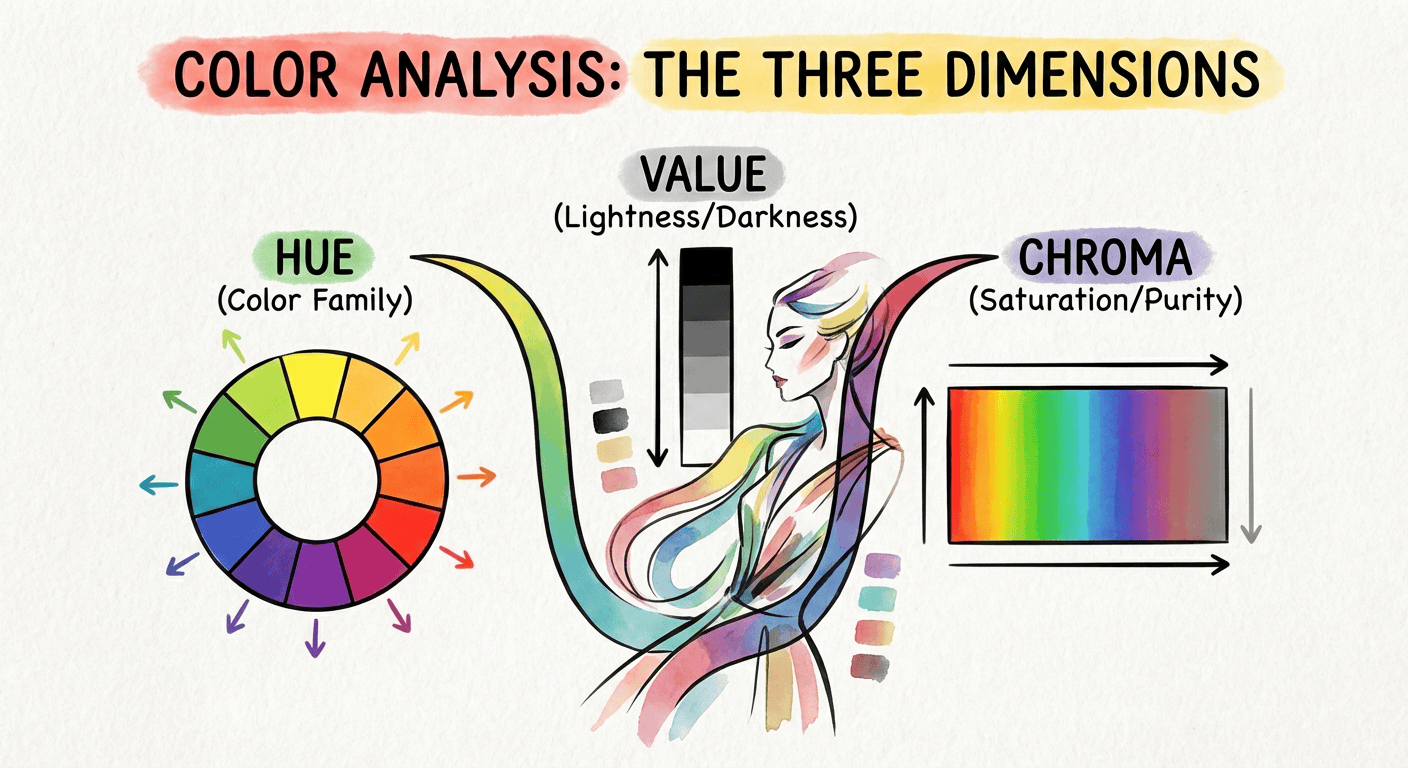
Why it matters: these three properties are the practical measurements that seasonal systems use to match colors for people. A personal color analysis is really shorthand for saying: "Which hue families, values, and chromas make my face look energized rather than washed-out?" Even a quick color analysis quiz or a color analysis upload photo free check evaluates these same dimensions.
Hue, value, and chroma form the practical foundation for any reliable color palette analysis — they explain why specific shades work for you and why others don't.
What Is the 16-Season Color Analysis System?
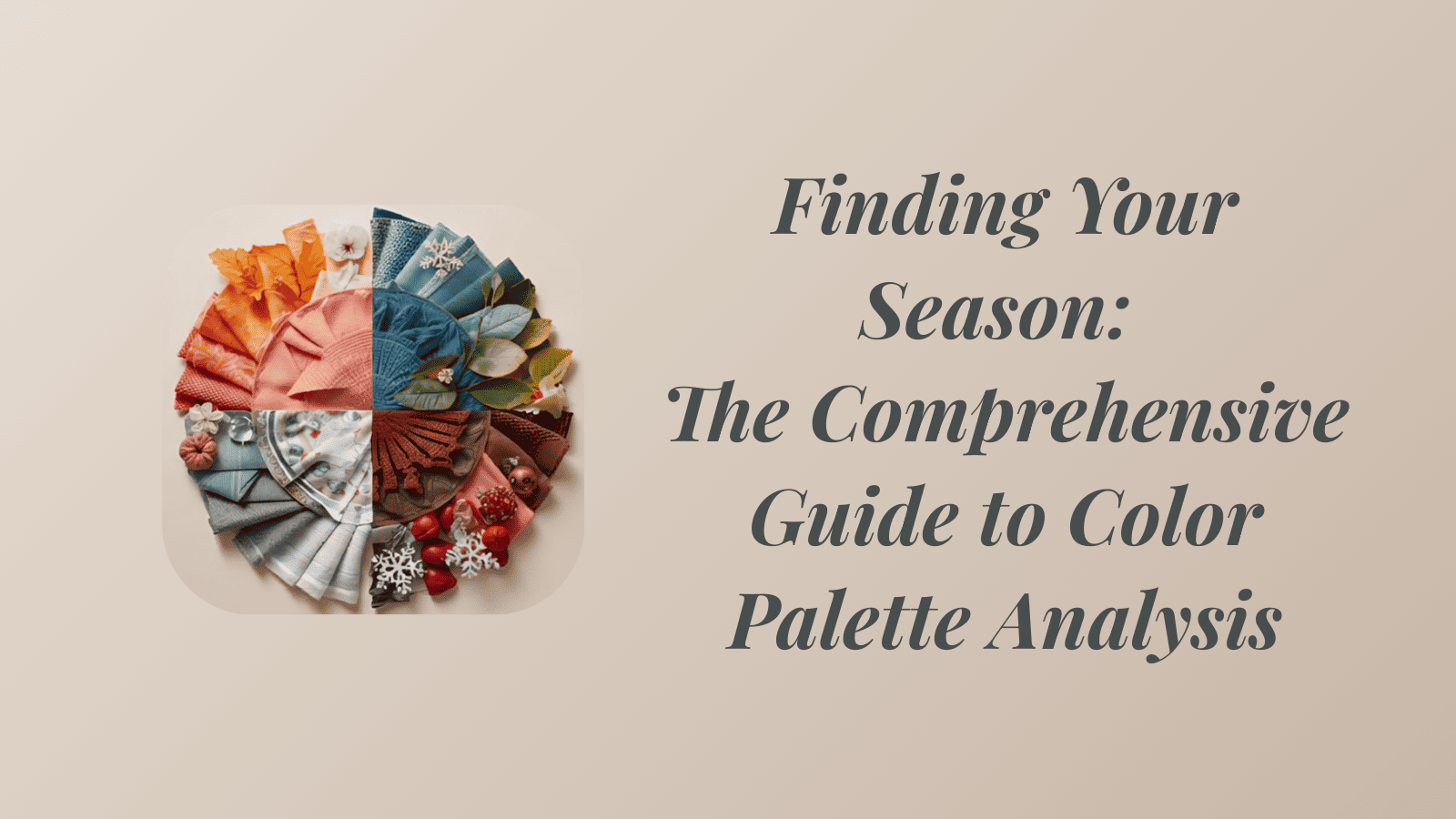
The classic four seasons (Spring, Summer, Autumn, Winter) are a helpful start, but the 16-season system refines those categories so the match fits more precisely.
- Why refine 4 seasons?
The 4-season model groups people broadly, but many real faces fall between those broad categories. The 16-season colors system splits each main season into four sub-types based on combinations of temperature (warm vs. cool), value (light vs. deep), and chroma (clear/bright vs. soft/muted). That makes it easier to find a palette that feels like "you" rather than a close approximation.
- How the seasons break down (high level):
- Spring variants: Light Spring, True Spring, Warm Spring, Bright Spring — generally warm and either light or clear.
(Think of typical spring color analysis palettes: peachy, fresh greens, warm corals.)
- Summer variants: Light Summer, True Summer, Soft Summer, Cool Summer — cooler and often softer or more muted.
(Examples in summer color analysis include powder blues and lavender).
- Autumn variants: Soft Autumn, True Autumn, Warm Autumn, Deep Autumn — warm, earthy, often richer.
(These characterize many autumn analysis examples like olive, burnt orange, warm browns).
- Winter variants: Cool Winter, True Winter, Bright Winter, Deep Winter — cool, clear, and often high-contrast.
(Classic winter color analysis shades include cobalt, true black, and vivid jewel tones).
- Why 16 seasons works better:
With four times the granularity, stylists and tools (including AI color analysis systems) can avoid forcing a person into an ill-fitting group. That means more precise wardrobe choices, clearer color analysis examples to follow, and fewer "this almost works but not quite" moments.
The 16-season system refines the broad seasonal idea into practical subtypes using temperature, value, and chroma — giving you a more accurate and useful color palette analysis result.
How to Identify Your Personal Color Season
Now that you know the building blocks (hue, value, chroma) and how the 16-season system refines those ideas, let's make it practical. Below are clear, repeatable steps you can use at home — or verify later with a color analysis quiz or an AI color analysis free trial — to narrow down which seasonal palette fits you best.
Step-by-Step Guide to Discover Your Season
Use three simple checks — undertone, value, and chroma — then combine the results. Each step slices away unlikely options until one or two seasons remain.
Check Undertone (Warm vs. Cool vs. Neutral).
- Look at the veins on your wrist in natural light: greenish veins often signal a warm undertone, bluish or purple veins point to cool, and a mix suggests neutral.
- Jewelry test: gold tends to flatter warm undertones; silver usually flatters cool. If both look good, you may be neutral.
- Sun reaction: do you tan easily (often warm/neutral) or burn then peel (often cool)? These clues help your personal color analysis start on the right foot.
Assess Value (Light, Medium, or Deep).
- Step back and notice overall contrast between your skin, hair, and eyes. Are you low-contrast (soft differences) or high-contrast (dramatic differences)?
- A person with very light skin and light hair often falls into the Light subtypes; dark hair with pale skin can point toward Deep or some Winter categories.
Evaluate Chroma (High-contrast/Clear vs. Soft/Muted).
- Try a bright, saturated shirt next to your face. If bright colors make you look lively, you likely lean toward clearer/brighter palettes. If those same colors overpower you and softer shades look better, you're probably in a muted/soft group.
Combine Traits.
- Match your undertone + value + chroma: warm + light + clear → a Spring subtype; cool + muted + light → a Summer subtype; warm + deep + muted → an Autumn subtype; cool + deep + clear → a Winter subtype.
- If you want to confirm, use a color analysis upload photo free service or a local consultant (many people google color palette analysis near me), but the three checks above will usually narrow you to one of the 16 seasons.
Why these steps matter: Each step reduces ambiguity. Instead of guessing your palette, you're measuring observable traits designers use in every color palette analysis — whether manual or automated. These small tests often convert an "I think" into a confident "I know."
Start with undertone, then judge lightness and saturation; combining those three gives a reliable season candidate you can later validate with an online color analysis quiz or an AI tool.
Seasonal Color Characteristics
Once you've narrowed your traits, these broad seasonal descriptions show what to look for in real life and in color analysis examples.
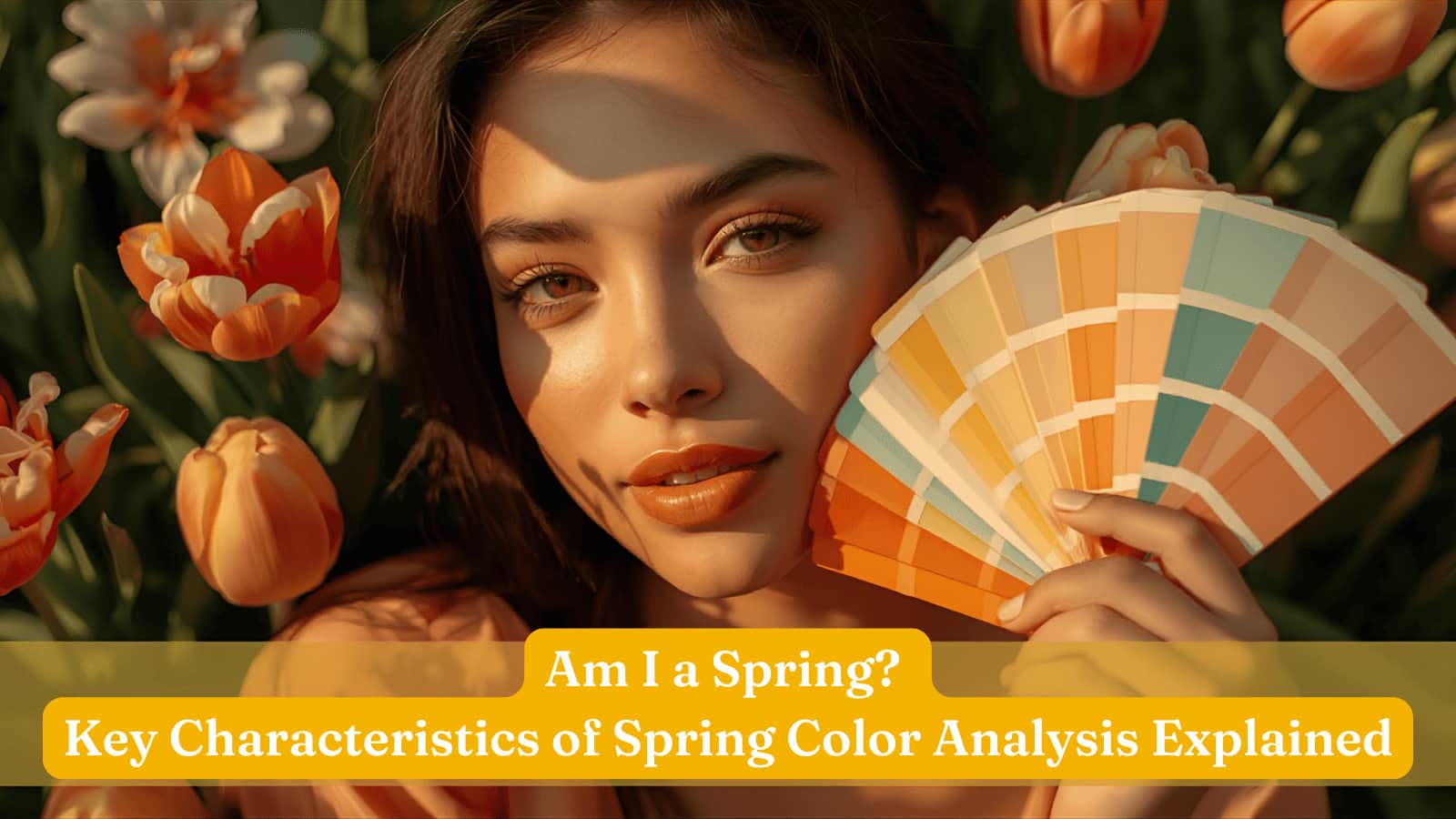
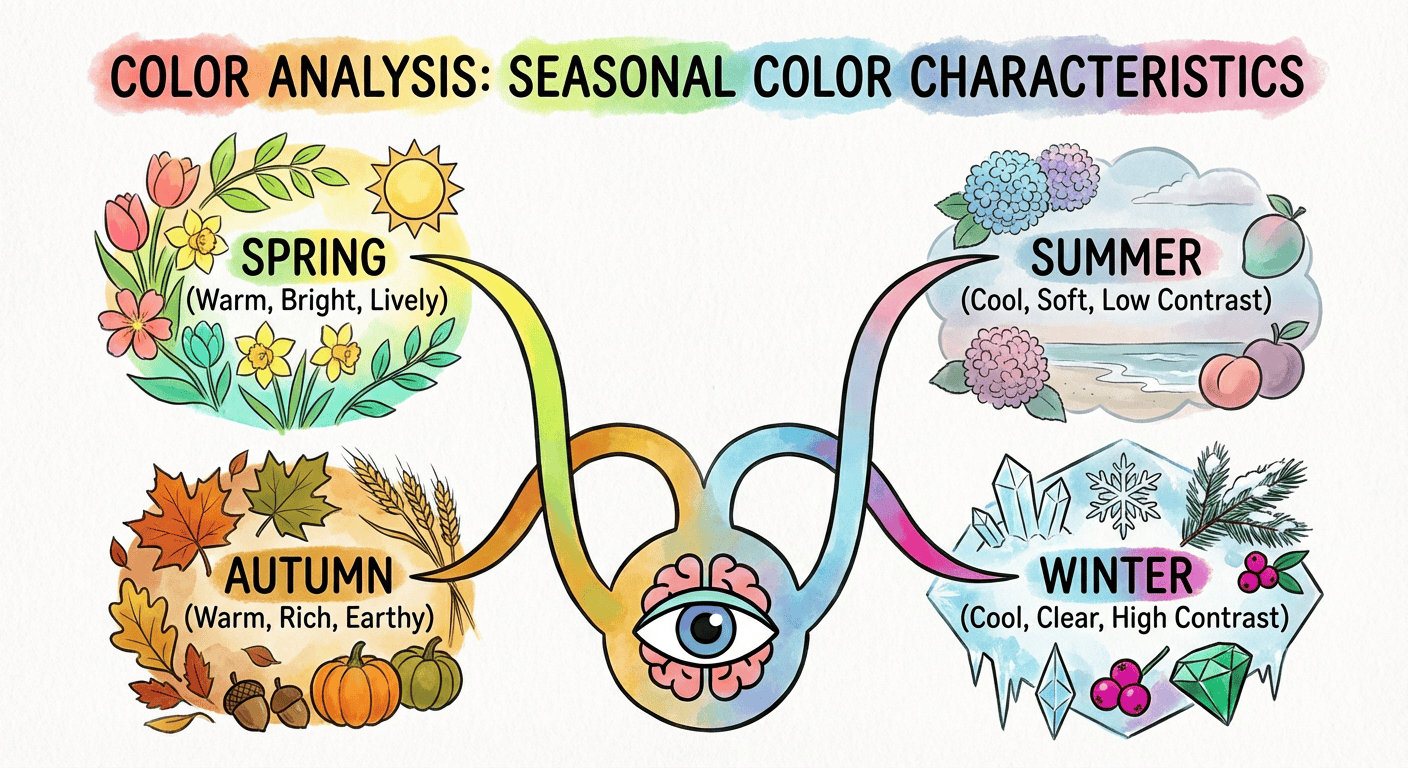
- Spring series (warm, bright, lively). Spring palettes are warm and often clear; think peach, coral, mint green, and warm sand. Spring color analysis types glow in sunny, light colors rather than heavy, cool tones.
- Summer series (cool, soft, low contrast). Summers favor softer, cooler hues — powder blue, dusty rose, lavender. Summer color analysis examples show how muted shades make features appear gentle and blended.
- Autumn series (warm, rich, earthy). Autumns suit deeper, earthy colors like olive, burnt orange, and warm browns. In autumn analysis examples, these tones bring warmth to the skin and harmonize with sunlit hair colors.
- Winter series (cool, clear, high contrast). Winters handle strong, vivid colors and high contrast — cobalt, true red, and bright jewel tones. Winter color analysis photos often show how stark contrasts sharp facial features.
- Subtle internal differences: Within each main group, subtypes tweak lightness and saturation. For instance, Light Spring vs. Bright Spring both read warm but the first is softer and paler, the second more vivid. Those nuances are exactly why the 16-season approach beats one-size-fits-all advice.
Examples & Why It Matters:
If a Spring person wears true navy and charcoal (cool, heavy), their skin can look dull; swapping to warm sand or coral brightens the face. A Soft Summer wearing a neon teal may look washed out; switching to powder blue restores harmony. These are the kinds of color analysis examples stylists use to teach you what to buy and what to avoid — and why some shoppers prefer a hands-on session or even to try an AI color analysis free preview before committing to a full wardrobe change.
Each season has a recognizable mood — Spring (warm/bright), Summer (cool/muted), Autumn (warm/deep/earthy), Winter (cool/clear/high-contrast). Use real examples to see how the right tones energize your face and the wrong ones flatten it.
Applying Your Seasonal Color Palette in Real Life
Before you start swapping every item in your closet, it helps to translate your season into a few practical rules. The goal is to make color palette analysis useful every morning, not just something you read about. Below are straightforward, do-now tactics for clothing, makeup, hair, and accessories — plus small tests you can run (or validate with a color analysis quiz or a quick color analysis upload photo free) to see results fast.
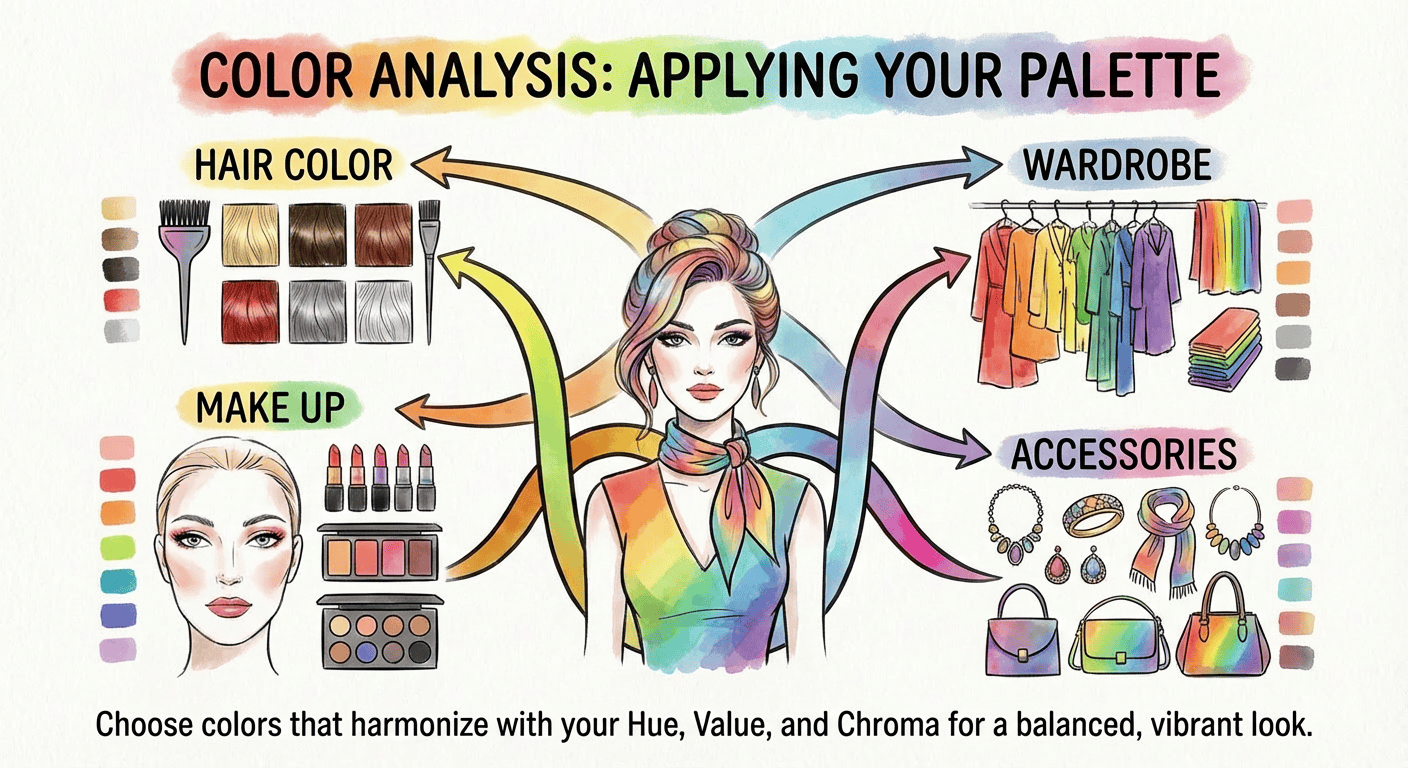
Wardrobe & Styling Tips
Once you know your season, use it as a filter for buying, pairing, and editing clothes. Think in terms of staples, statement pieces, and supportive accents.
- Build a core wardrobe of season-friendly neutrals. Start with 3–5 neutral base items in tones that match your season (e.g., warm sand or camel for many autumn types; cool stone or slate for some summer types). Neutrals anchor outfits so your seasonal accent colors can shine without clashing.
- Choose key pieces by season, then add accents. Pick 2–3 "signature" colors from your palette for blouses, dresses, or jackets. Use smaller items (scarves, belts, shoes) to introduce brighter or deeper seasonal shades. For example, a spring color analysis palette might favor coral or mint as accent hues; a winter color analysis palette can handle stronger jewel tones.
- Use a capsule-wardrobe mindset. Limit the palette scope to maximize mix-and-match possibilities. A small, intentional wardrobe saves time and makes shopping decisions easier because you're filtering by what truly suits you.
- Let patterns follow the palette. When you wear prints, check that at least one dominant color in the print belongs to your seasonal palette; otherwise the pattern can make your face look washed or mismatched.
- Practical shopping test: Hold a potential purchase near your face in natural light (or upload a photo to an AI color analysis free preview). If the item brightens your complexion and makes your eyes pop, it's likely a keeper.
These steps make your personal color analysis actionable — instead of a list of pretty swatches, you get a working set of rules that reduce wardrobe waste and help you look put-together effortlessly.
Start with season-aligned neutrals, choose a few signature colors, and use accessories and prints to expand looks without losing harmony.
Makeup, Hair & Accessories Using Your Palette
Color analysis isn't only for clothing — it's just as useful for lipstick choices, blush tones, hair color decisions, and jewelry.
- Makeup that follows your season. Pick foundation undertones that match your skin, then choose lip and cheek colors from your seasonal palette. A summer color analysis person often looks best in cool, soft rose and mauve tones, while someone in the autumn group may prefer warm terracotta and peach. Try a color analysis quiz or the color analysis upload photo free feature to preview shades on your own photo.
- Hair color with a palette mindset. When considering dye, aim for tones that harmonize rather than compete: warm honey or caramel suits many warm-undertone seasons; ash or cool brown shades often flatter cool seasons. If you're unsure, use a virtual try-on (many AI color analysis tools offer hair simulators) to see how a shade affects your overall contrast.
- Accessories as color amplifiers. Scarves, earrings, and glass frames are fast, low-risk ways to test seasonal colors. A scarf in one of your seasonal accent shades can immediately lift a neutral outfit and clarify your face color.
- Everyday rule of thumb: If a makeup or accessory color makes your skin look flushed, awake, and even-toned — it's working. If it creates shadows, dullness, or a sallow cast, try a different hue from your palette.
Use your seasonal palette to guide makeup undertones, hair color choices, and accessory selection; small swaps often produce the most noticeable improvements.
AI Color Analysis — Your Personalized Tool
When visual judgments get messy, an AI can speed things up and make the result more consistent. If you've ever hesitated between two jackets or wondered whether a lipstick shade actually suits you, an AI-driven color tool can give you a clear, photo-based read — fast.
AI Color Analysis — What It Is and How It Works
Trusted AI color analysis finished in minutes. This kind of AI color analysis brings together simple inputs (a clear photo) and measured outputs (a tailored palette) so you get actionable results without hours of testing.
- Upload a Clear Photo. Start with a natural-light headshot where your face is visible. Many people look for a color analysis upload photo free option or try a color analysis quiz first; uploading a photo lets the system work from your real tones rather than guesswork.
- AI Analyze Your Colors. The engine examines skin undertone, hair color, eye color, and facial contrast to evaluate which hues flatter you. This is where an AI color analysis free trial can be handy: automated checks reduce subjective bias and speed up personal color analysis.
- Receive Your Personalized Palette. The tool returns a refined set of season-aligned colors you can use for clothes, makeup, and accessories. Instead of generic swatches, you get a palette matched to your unique mix of hue, value, and chroma.
- Explain Why Colors Suit You. Good AI doesn't just hand you swatches — it explains why those shades work (for example: "warm, muted corals enhance your neutral-warm undertone") and shows color analysis examples so you see the effect on a photo.
- Try Before You Commit. The tool includes virtual makeup try-on, hair and style simulation, or outfit draping so you can preview changes. If you prefer in-person help, people still search color palette analysis near me for a human second opinion — AI and local consultations can complement each other. However, AI color analysis offers several advantages over in-person consultations, including being more affordable, easy to access, and less prone to subjective bias, etc.
AI color analysis turns a complex set of visual cues into a quick, personalized color palette analysis you can apply immediately — upload a photo, let the AI evaluate undertone and contrast, then use the tailored palette (and the why-notes) to guide wardrobe, makeup, and style decisions.
Common Misconceptions & Practical Tips
Despite its growing popularity, color analysis is still often misunderstood. Let's clear up a few common misconceptions to help you feel more confident in using this method as part of your style journey.
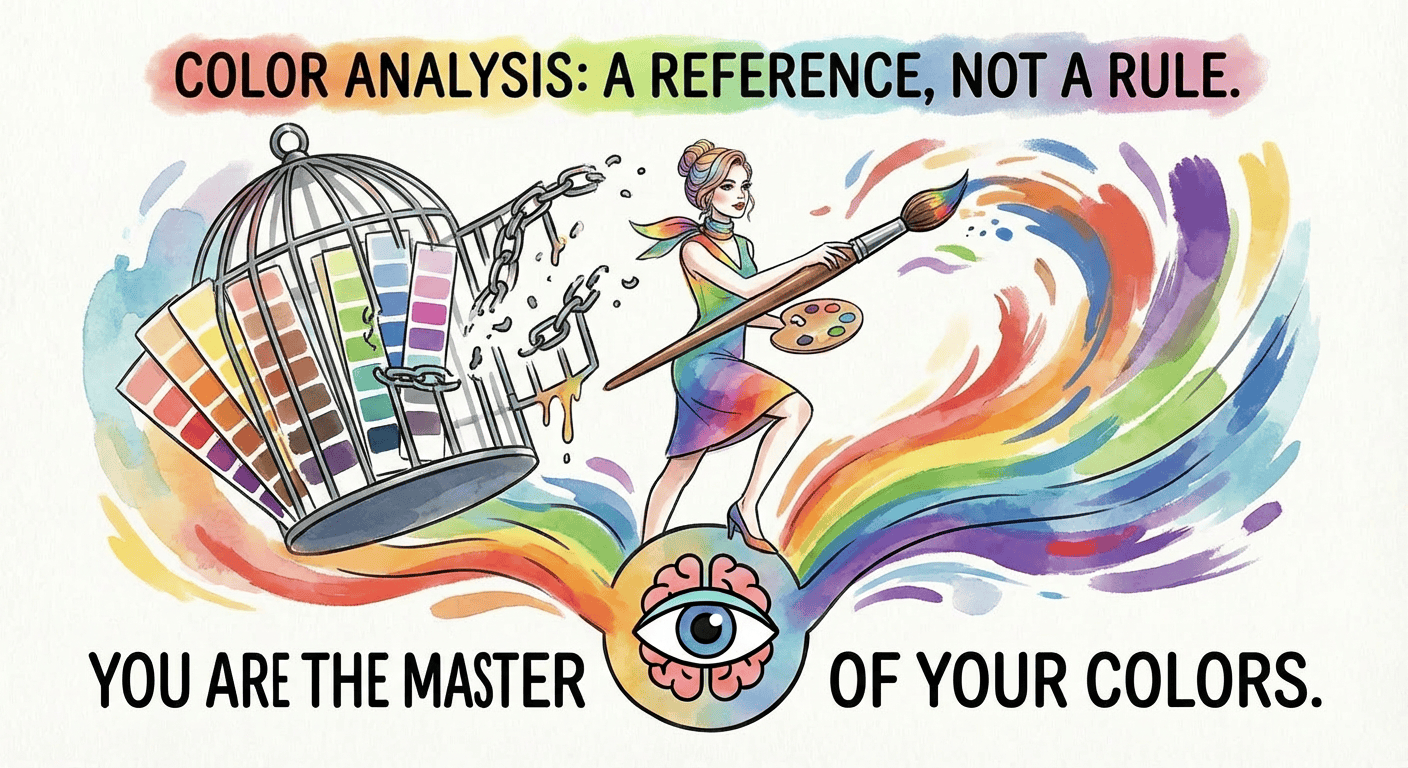
- It Doesn't Lock You Into One "Label." One of the most common misconceptions about personal color analysis is that it will categorize you into a fixed "box." In reality, your season or palette is a guideline — not a rule. While color analysis helps highlight shades that naturally enhance your features, your style, personality, and preferences are still in the driver's seat. Feel free to experiment and adapt the results based on what makes you feel most confident.
- Seasonal Classification Is Just a Reference — You're in Control. A 16-season color palette analysis might suggest a group of colors that work well for you, but how you choose to use them is entirely up to you. Seasonal palettes are a starting point, not a strict formula. Think of them as a toolkit — you can mix, match, and layer according to your personal style.
Color analysis isn't about boxing you in — it's about giving you the tools to make informed decisions. Whether using AI, a stylist, or a combination of both, remember that the final choice is yours.
Conclusion — Your Seasonal Palette as a Guide, Not a Rule
Color palette analysis helps you identify the colors that naturally enhance your features, and the 16-season system offers a more precise approach than traditional methods. Using an AI color analysis tool can make this process faster, more accurate, and easier to apply in daily life.
Treat your seasonal palette as a flexible guide rather than a strict rule. By understanding and applying your best colors in clothing, makeup, hair, and accessories, you can elevate your personal style and make confident, informed choices every day.
FAQ
1. What is color palette analysis?
Color palette analysis is a method used to determine which colors naturally enhance your features, such as your skin tone, hair color, and eye color. It helps you choose the most flattering colors for your wardrobe, makeup, and accessories.
2. How does the 16-season color analysis work?
The 16-season color analysis system refines the traditional 4-season approach by breaking each season into 4 sub-categories (e.g., Light Spring, True Spring). This system provides a more personalized color palette based on your unique undertone, contrast, and saturation.
3. Is AI color analysis accurate?
Yes, AI color analysis is accurate as it evaluates your skin tone, hair, and eye color to generate a personalized color palette. It's fast, objective, and can help you make better styling decisions without guesswork.
4. How can I find my personal color season?
To find your personal color season, assess your undertone (warm, cool, neutral), value (light, medium, deep), and chroma (clear or muted). These factors help determine whether you belong to Spring, Summer, Autumn, or Winter, and further refine your season into a specific sub-category.
5. Can I use color palette analysis for makeup and accessories too?
Absolutely! Your seasonal color palette isn't just for clothes — it also works for choosing makeup shades, hair colors, and accessories. Matching these elements to your palette helps create a cohesive and flattering look.