Have you ever wondered why some outfits make your skin look radiant, while others wash you out despite being "on trend"? That's where the science (and art) of color comes in. This 16 season color analysis system is a powerful approach to discovering the hues that naturally enhance your complexion, accentuate your features, and make you look confident every day.
Whether you're a beauty minimalist or a fashion lover, understanding your true personal palette is a game‑changer — especially when the system goes beyond classic seasonal categories into the 16 season method. Add the accessibility of 16 season AI color analysis tools today, and you can uncover your ideal colors faster than ever.
In this guide, we'll walk you through:
- What personal color analysis really means and why it matters to your style?
- How does the 16 season color system work, including its core principles of undertone, value, and chroma?
- A detailed breakdown of the 16 seasonal color types and what makes each unique?
- How do modern AI Color Analysis tools support your journey with fast, personalized insights?
- Practical ways to apply your 16-season color analysis palettes in wardrobe, makeup, and accessories?
The Evolution of 16 Seasonal Color Analysis: From 4 to 16
Many people found that broader seasonal categories still left gaps when it came to individual variation in undertones and contrast. That's why experts developed the 16 season system — to offer more precise, personalized classifications that capture subtle differences in natural coloring.
Classic Four‑Season Color Analysis
Early color theory categorized people into four "seasons" — Spring, Summer, Autumn, and Winter — based on similar characteristics of color, undertone, and contrast. It offered a helpful starting point, but not enough nuance for everyone.
Why We Need a More Detailed System — 16 Seasonal Color Analysis
As more people got analyzed, it became clear that the traditional 4 season or even 12 season systems didn't capture the full diversity of coloring. Some people fall "between" categories or have features that don't quite match the broad palettes, leading to the development of the 16 season system — a more accurate, personalized system that helps identify exact color matches for every unique individual.
Understanding the 16 Seasonal Color Types
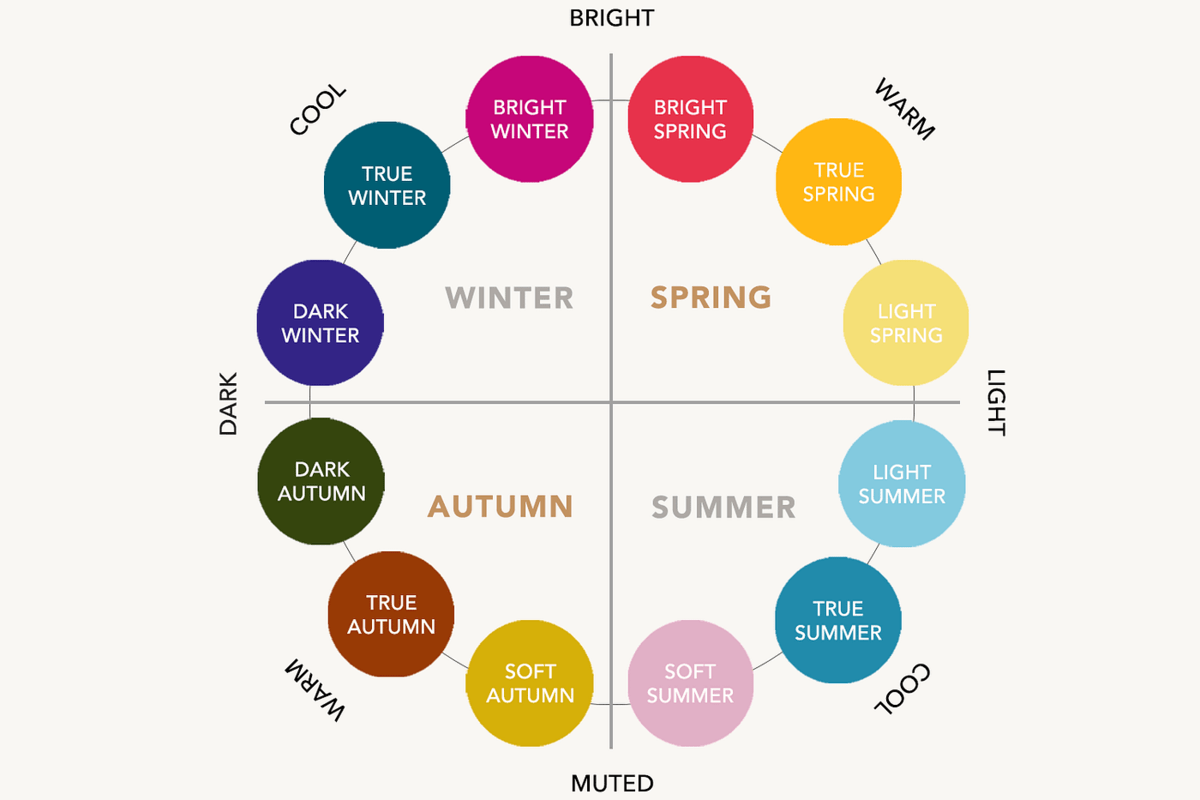
One of the biggest strengths of this method is that it doesn't just label you "Spring" or "Winter" — it specifies which version of that season suits you best. The 16 season color analysis system refines the classic seasonal color method into four primary seasons — Spring, Summer, Autumn, and Winter — each with four sub‑categories, resulting in 16 distinct possibilities.
Spring Subtypes
Bright Spring – A radiant subtype with warm, high‑contrast features. Using 16 season color analysis, Bright Spring shines in clear, vibrant hues like bright coral, turquoise, and sunny yellow that reflect lively blossoms and sunlit days.
True Spring – Classic Spring warmth and clarity with golden undertones. 16 season color analysis shows warm peach, coral, and golden beige tones enhance this subtype naturally.
Warm Spring – Rich, golden tones with depth. Earthy peach, warm greens, and soft amber flatter this subtype's golden undertones, confirmed by 16 season color analysis.
Light Spring – Delicate, lighter coloring best in airy, warm pastels like mint, soft coral, and butter yellow, as recommended by 16 season color analysis.
Summer Subtypes
Light Summer – Soft and cool, Light Summer features pale, delicate tones. 16 season color analysis suggests pastel blues, soft lavender, and light grey bring out its ethereal quality.
True Summer – Cool and balanced, best in muted rose, soft blue, and cool pink shades, as identified through 16 season color analysis.
Cool Summer – Subtle clarity with cooler undertones. Cool blues, soft peaches, and dusty rose harmonize with this subtype, highlighted by 16 season color analysis.
Soft Summer – Muted, gentle contrast suits blended, understated shades like muted plum, grey‑blue, and cool taupe, confirmed by 16 season color analysis.
Autumn Subtypes
Warm Autumn – Rich, warm undertones define Warm Autumn. Earthy greens, rust, mustard, and chocolate hues are recommended by 16 season color analysis for natural harmony.
True Autumn – Deep golden warmth and earthy tones like olive, camel, terracotta, and golden brown shine according to 16 season color analysis results.
Soft Autumn – Muted, warm tones like dusty olive, soft rose, and gentle browns create an understated palette, guided by 16 season color analysis.
Deep Autumn – Intensely warm and rich, Deep Autumn thrives in dark olive, burgundy, deep amber, and espresso hues, as suggested by 16 season color analysis.
Winter Subtypes
True Winter – Cool, clear contrast defines True Winter. Bold blues, crisp whites, and cool reds are highlighted by 16 season color analysis for striking effects.
Cool Winter – Icy undertones with slightly softened clarity. Frosty blues, cool berry shades, and steel gray complement this subtype per 16 season color analysis.
Bright Winter – High contrast and vibrant energy mark Bright Winter. Electric blues, hot pinks, and icy turquoises are ideal according to 16 season color analysis.
Deep Winter – Cool undertones combined with dramatic depth. Rich jewel tones like emerald, deep plum, charcoal, and navy enhance bold features, confirmed by 16 season color analysis.
What Is the 16 Season Color Analysis System?
This 16 season color analysis approach emphasizes undertones, contrast, and chromatic clarity to provide a personalized palette that highlights your natural features.
It works by analyzing your natural coloring across three core dimensions:
- Undertone: Warm vs. cool base hues under your skin, assessed through 16 season color analysis techniques.
- Value: Light vs. dark overall appearance, determined with 16 season color analysis methods.
- Chroma/Clarity: Muted vs. bright coloring, evaluated according to 16 season color analysis guidelines.
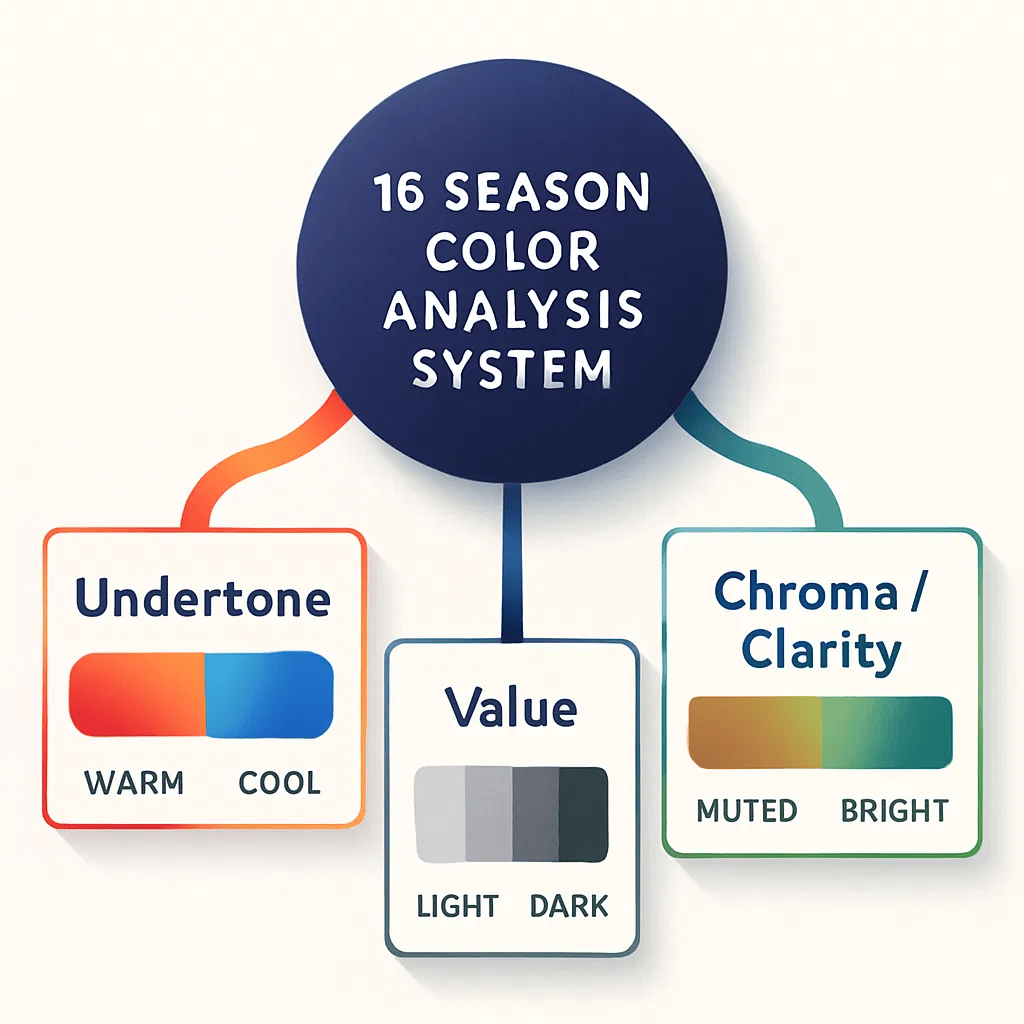
When all three dimensions are combined, you get a precise seasonal type and a personalized palette, often visualized using a 16 season color analysis chart.
How the 16 Season Color Analysis System Actually Works
The 16 season color analysis system works by carefully examining your natural coloring to determine the exact hues that flatter you most. Unlike general seasonal methods, it goes beyond broad categories to identify subtle differences in undertones, contrast, and chromatic clarity. Here's a detailed breakdown of how the process works:
1. Undertone Identification
Undertones are the underlying hues of your skin and form the foundation of your seasonal color type. To determine your undertone:
- Warm undertones usually have a golden, peachy, or yellow base. People with warm undertones often look best in earthy shades, warm reds, and golden yellows.
- Cool undertones have pink, red, or blue bases. Cool undertones are complemented by jewel tones, icy blues, and magentas.
- Neutral undertones sit between warm and cool. People with neutral undertones can often wear a mix of both warm and cool shades, but subtle adjustments in brightness and depth are still important.
A 16 season color analysis quiz may involve comparing your skin against specific draped fabrics (16 season analysis drapes) or observing how jewelry (gold vs. silver) reflects against your complexion. These practical checks help pinpoint undertones more accurately than visual guesswork alone.
2. Contrast & Depth Evaluation
Contrast measures the difference between your features, such as hair, eye, and skin color, which is crucial for determining whether you belong to a light or deep seasonal subtype. Here's how it works:
- High contrast: Dark hair with light skin, or bright eyes with darker features, indicates high contrast. High-contrast individuals often suit bolder, clearer colors.
- Low contrast: Similar shades between hair, eyes, and skin create a softer, blended look. These individuals generally do better in muted, harmonious tones.
- Medium contrast: Falls somewhere in between, requiring careful attention to both saturation and value of colors.
By evaluating contrast, the system identifies which of the 16 seasonal color types will allow your natural features to stand out without being overpowered.
3. Determining Chromatic Clarity
Chromatic clarity (also called "chroma") measures how bright or muted your coloring is. It answers the question: Should your palette favor vibrant, clear shades or soft, blended tones?
- Bright / Clear coloring: Strong, vibrant tones amplify your features and make you look lively and glowing. For example, Bright Spring or Bright Winter individuals often shine in crisp, high-saturation colors.
- Muted / Soft coloring: Gentle, blended shades harmonize with softer features. Soft Summer or Soft Autumn subtypes typically look best in understated, smoky tones.
This evaluation isn't just done by comparing fabric swatches anymore — modern AI tools analyze your features directly from photos to assess whether your natural coloring is better suited to vibrant, clear tones or softer, muted shades by examining pixel‑level color data, contrast, and undertones to see which shades make your complexion appear luminous versus dull.
Bringing It All Together
After analyzing undertone, contrast, and chromatic clarity, the system assigns you one of the 16 seasonal types. The result is a personalized palette that tells you exactly which colors to incorporate into your wardrobe, makeup, and accessories. The 16 season color analysis palettes derived from this process are far more precise than traditional four-season methods because they account for subtle nuances in natural coloring.
For example, two people might both have cool undertones, but one has high contrast and bright coloring (suiting Bright Winter), while the other has low contrast and soft features (suiting Soft Summer). The system ensures that each individual receives a tailored palette that enhances their unique beauty rather than applying a one-size-fits-all approach.
16 Season Color Analysis Test & Tools
Many modern services offer a 16 season color analysis test that classifies you into one of the 16 types. These tests often ask about undertone, eye and hair color, contrast preference, and even style goals to produce a personalized result.
AI tools also allow a skin tone 16 season analysis test, using a simple selfie or interactive interface to match your natural coloring to your seasonal palette. Unlike traditional consultations, AI systems can instantly generate 16 season analysis drapes for a hands-on visualization of your best colors.
What Makes 16 Season Color Palettes Different
The 16 season color analysis palettes go far beyond generic seasonal groupings by breaking each main season into four precise sub‑categories based on undertone (warm/cool), value (light/deep), and chromatic clarity (clear/muted). This granularity means the palettes are tailored to very specific coloring characteristics — not just broad labels like "Spring" or "Winter." For example, someone with warm undertones might need brighter, more saturated shades, while another person with the same undertone but softer contrast will look better in muted versions of those colors — nuances the 16‑palette system captures that 4‑season approaches can miss.
These palettes also help explain why two people with similar base tones can look very different in the same shade. By accounting for depth and clarity in addition to undertone, the 16 season color analysis palettes help you see exactly which colors will make your complexion glow and which may make it look dull.
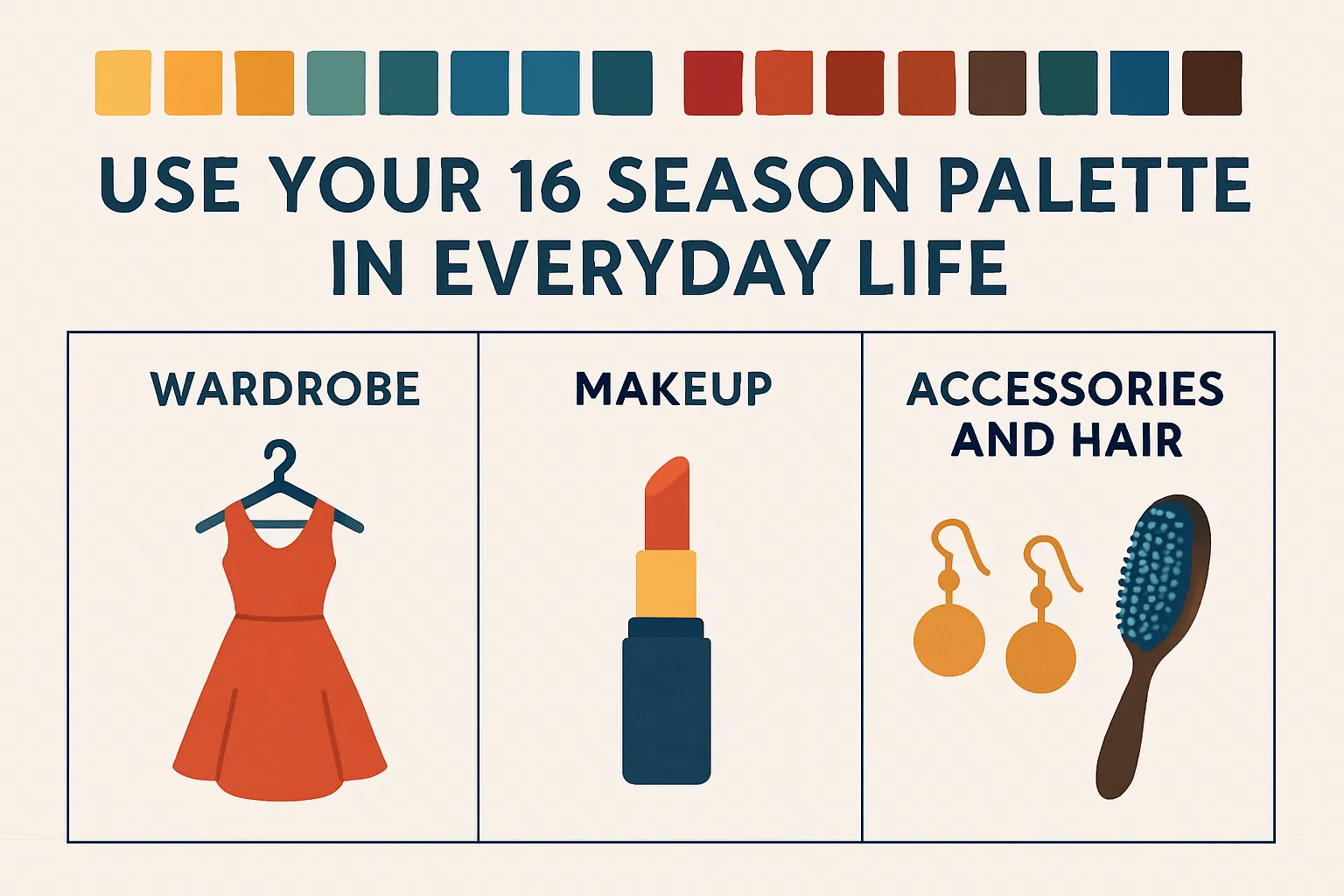
How to Use Your 16 Season Palette in Everyday Life
Once you've identified your 16 season color analysis palette, it becomes a practical tool for daily style decisions:
- Wardrobe Planning: Choose clothing colors using your 16 season color analysis palettes that harmonize with your natural features so outfits always feel cohesive and flattering. Matching your best tones reduces guesswork when building a capsule wardrobe or shopping.
- Makeup: Use your 16 season color analysis palette to select lipsticks, eyeshadows, and blush colors that enhance your skin tone and eyes rather than compete with them — for instance, cool palettes may favor icy rose and berry shades, while warm palettes shine with coral and gold.
- Accessories and Hair: Let your 16 season color analysis palette guide accessory choices and even hair color decisions. Silver jewelry often complements cool tones, while gold and earthy metals look great with warm palettes. Echoing your seasonal hues with scarves, bags, and scarves ties, your whole lookcomes together.
Common Misconceptions
- Myth #1 — You can't wear other shades.
Knowing your best colors helps, but you're not restricted.
- Myth #2 — It's "pseudo‑science."
While subjective elements exist, the system is grounded in color theory and practical pattern recognition.
- Myth #3 — Systems are all the same.
There's variation among different 16 season color analysis systems, but core principles — undertone, value, and contrast — remain consistent.
Conclusion — Embrace Your Glow with Color Analysis
Whether you're discovering your 16 season color analysis results for the first time or refining your personal style, this 16 season method offers a precise and empowering way to see which hues truly elevate your look.
Today's tools like AI Color Analysis (aicoloranalysis.ai) make it easier than ever to uncover your best colors — simply upload a photo and let advanced algorithms analyze your undertone, contrast, and color harmony to deliver a personalized palette in seconds. Tools like bring professional‑level insights into your everyday style choices with fast, accurate results that help you shop smarter and glow confidently.
FAQ About 16 Season Color Analysis
1、What is the 16 Season Color Analysis?
16 season color analysis expands the traditional four‑season method into 16 precise subtypes by evaluating undertone, depth, and clarity to create a tailored palette that enhances your natural features.
2、How does the 16‑season system differ from classic seasonal color analysis?
Unlike the basic Spring/Summer/Autumn/Winter model, the 16‑season method refines each season into four subcategories based on tone, contrast, and chroma, allowing for more personalized color recommendations.
3、Can I take a 16 season color analysis test online?
Yes — many online tools and 16 season color analysis quizzes use AI to evaluate your features from a photo and assign you a specific season with a personalized palette. Tools like AI Color Analysis let you upload a selfie and get your best colors in under a minute, making the process fast and easy.
4、Why should I use AI for color analysis instead of traditional draping?
AI color analysis tools analyze pixel‑level color data from your photos to assess undertones, contrast, and chromatic clarity quickly and objectively, without physical swatches. Modern services like AI Color Analysis (aicoloranalysis.ai) provide precise, personalized recommendations — often in minutes rather than hours.
5、Can my color season change over time?
Yes — changes like aging, hair color changes, tanning, or other shifts in your natural coloring can affect your season, and a re‑analysis can help update your palette.
6、Do I need special lighting or preparation for an online color analysis?
For the most accurate results, take your photo in natural light with minimal makeup and a neutral background so the AI tool can clearly assess your natural tones.
7、What benefits do I get from knowing my 16‑season color palette?
Knowing your personalized palette helps simplify wardrobe choices, improve makeup matching, and build a cohesive look that enhances your skin, eyes, and overall presence.