Imagine the gentle sunlight of early April—soft washes of coral, peach, and fresh yellow-green. This is the essence of the Light Spring color palette. As a blend of the warm vitality of Spring and the cool softness of Summer, this season is defined by a delicate, "sunlit" quality. However, because it sits right on the border of warm and cool, it is arguably the most difficult season to identify correctly.
In this comprehensive guide, we move beyond the basics to help you master your unique coloring. Whether you are a classic blonde or a brunette wondering if you fit the mold, we cover it all—from clearing up the confusion of Light Spring vs. Light Summer to adapting your Light Spring color palette for fall and exploring trending Korean styles. Get ready to stop guessing and start discovering your most radiant self.
TL;DR: Light Spring is a warm-neutral season defined by lightness and low contrast features. Your best colors are Coral, Peach, Warm Ivory, and Camel, while Black and heavy dark tones are your biggest styling mistakes. Contrary to popular belief, soft brunettes can fit this season perfectly! To maximize your glow, embrace Korean-style tonal outfits, swap harsh black mascara for brown, and choose Rose Gold jewelry.
What is a Light Spring? (Defining the Season)
Light Spring is a "flow" season, sitting uniquely at the crossroads of Spring and Summer. While you belong to the Spring family, your palette is heavily influenced by the cool, delicate qualities of Summer. This combination creates a look that is warm-neutral, luminous, and full of gentle brightness.
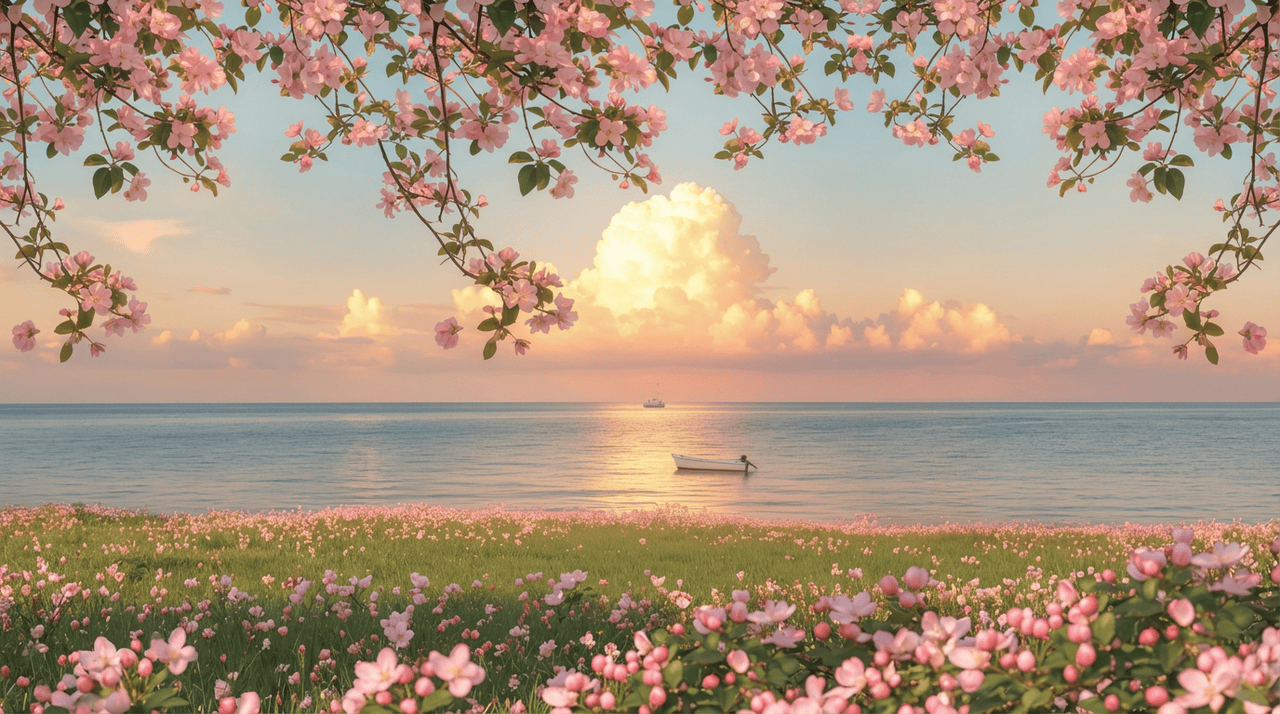
Imagine the sunlight in early May—it is warm and inviting, but lacks the intense, scorching heat of mid-summer or the high contrast of winter. That is the energy of a light spring.
To truly understand this season, we need to break it down into the three pillars of color analysis:
- Value (Lightness): The Dominant Characteristic
- The primary defining feature of this season is light. Your best colors have a high value, meaning they contain a lot of white. Deep, heavy, or dark colors will instantly look overwhelming and out of place on you. Your overall coloring is delicate and lacks heavy shadows.
- Temperature (Undertone): Warm-Neutral
- Your temperature is primarily warm, but it is not the fiery heat of a True Spring. Because of the Summer influence, your warmth is cooled down slightly, resulting in a fresh, "warm-neutral" temperature. You glow in warm colors, but they must be sheer and light rather than rich and spicy.
- Chroma (Saturation): Medium-Soft
- While Springs are generally known for being bright, Light Spring is the softest of the bunch. Your chroma is distinct—it is clear and relatively bright, but it has a "watercolor" quality. It is not as intensely saturated as True Spring; instead, it feels airy, translucent, and effortlessly blended.
Am I a Light Spring? (Characteristics & Signs)
Determining your season is about observing the harmony between your natural features. As a Light Spring, your overall coloring is defined by a lack of depth and darkness. Here is a detailed scan of the typical physical traits:
- Eyes: Your eyes are undeniably light and clear. They are most commonly Light Blue, Light Green, or a sunlit Light Hazel. If you are searching for a light spring color palette green to match your eyes, look for shades that echo the natural turquoise or minty flecks often found in a Light Spring's iris.
- Hair: Traditionally, Light Springs have hair ranging from Light Golden Blonde to Strawberry Blonde or Light Golden Brown. The hair usually reflects light well, appearing shiny and warm.
- Skin: Your complexion likely has a warm, peachy, or golden undertone. It often has a delicate, almost translucent quality that blushes easily. Even if you have fair skin, it will not have the "blue" icy look of a Winter; it will look creamy and ivory-like.

Can Light Springs be Brunettes? (Breaking the Blonde Myth)
There is a common misconception that you must be a natural blonde to fit this season. This is false. The light spring color palette brunette variation is real and quite common.
You can absolutely be a Light Spring with brunette hair, provided the hair is a Soft Golden Brown or Light Chestnut rather than a deep, cool espresso. The key is in contrast. If your brown hair is soft, has warm golden or copper highlights in the sun, and does not create a harsh contrast against your skin, you may fit the Light Spring profile perfectly. Many brunettes mistake themselves for Autumns, but if rich, heavy Autumn earth tones look "muddy" on you, you are likely a Light Spring.
The Contrast Test: Low to Medium
One of the most reliable indicators is your contrast level. Light Springs have Low to Medium Contrast.
This means there is no stark difference between your hair, skin, and eyes. Unlike a Winter (who has black hair and pale skin), your features blend harmoniously. If you take a black-and-white photo of yourself, everything would appear in similar ranges of light-to-medium grey, without extreme darks.
Celebrity Examples
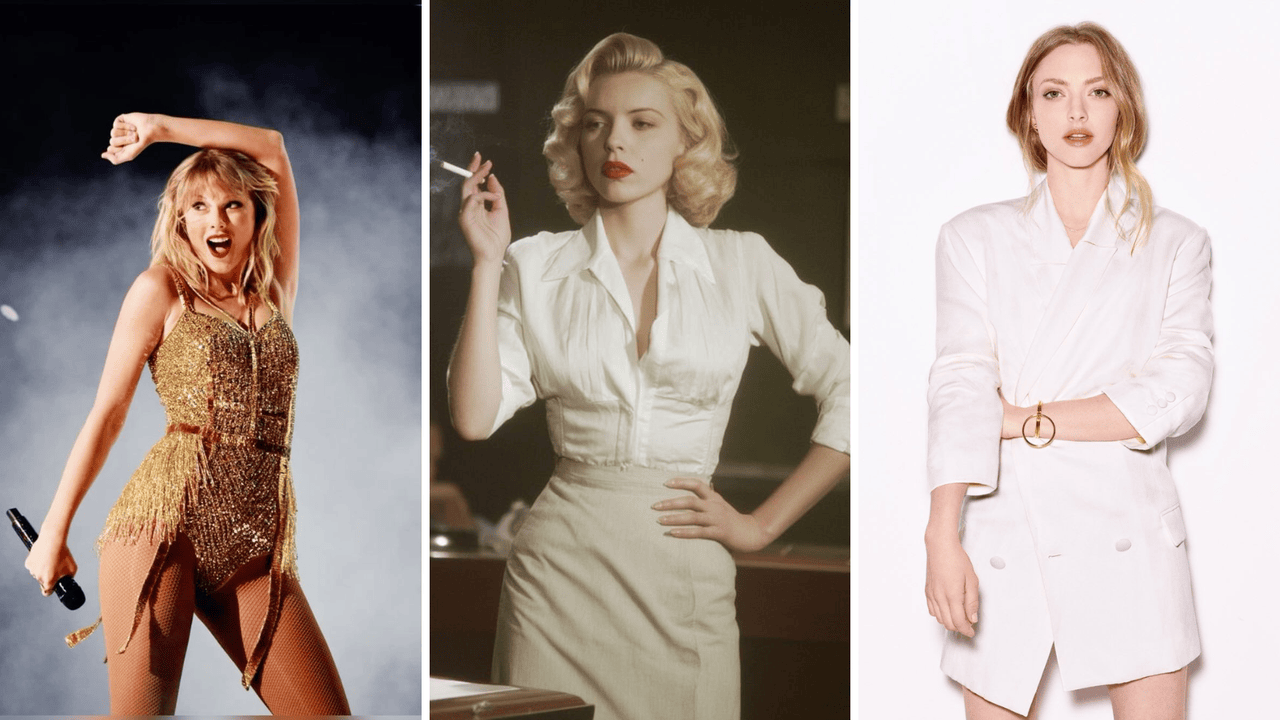
Visualizing celebrities can help solidify the concept. Famous Light Springs include:
- Taylor Swift
- Scarlett Johansson
- Amanda Seyfried
Why they fit: Look at Taylor Swift. When she wears severe black eyeliner or heavy dark clothing, she often looks tired or "washed out." However, when she wears sparkling gold, soft peach, or creamy ivory, her skin looks radiant and alive. This is the power of the Light Spring palette in action.
The Light Spring Color Palette (Your Best Colors)
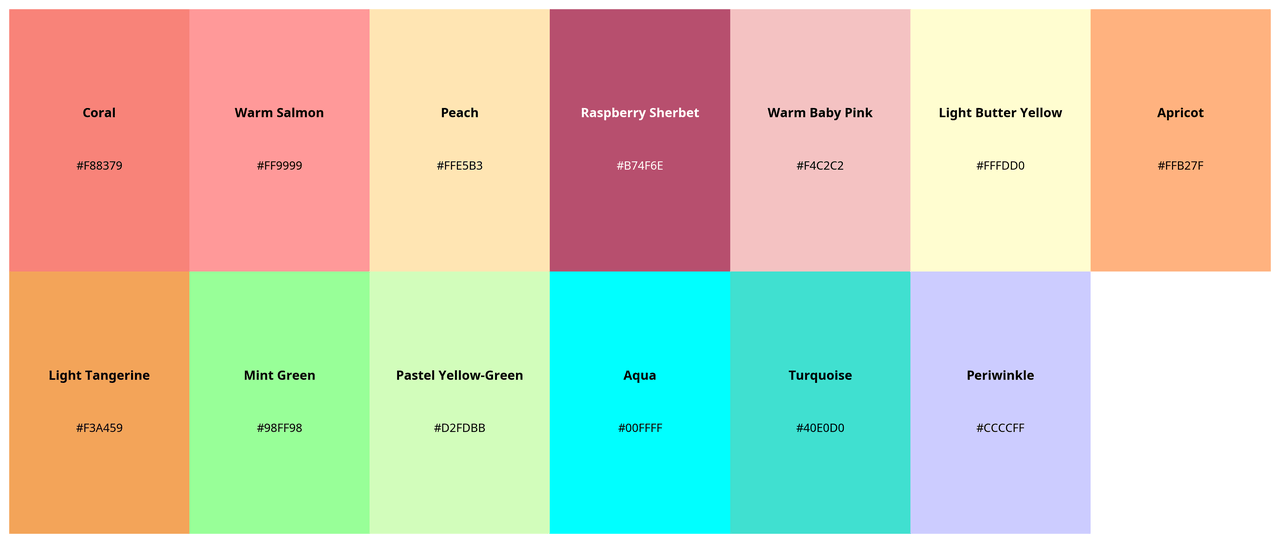
Your palette is reminiscent of a bouquet of fresh wildflowers bathed in warm sunlight. The colors are clear, reasonably bright, and always have a warm, yellow-gold undertone. When shopping, it is helpful to save a digital light spring palette card to your phone to compare fabrics against these ideal shades.
The Neutrals (Your Foundation)
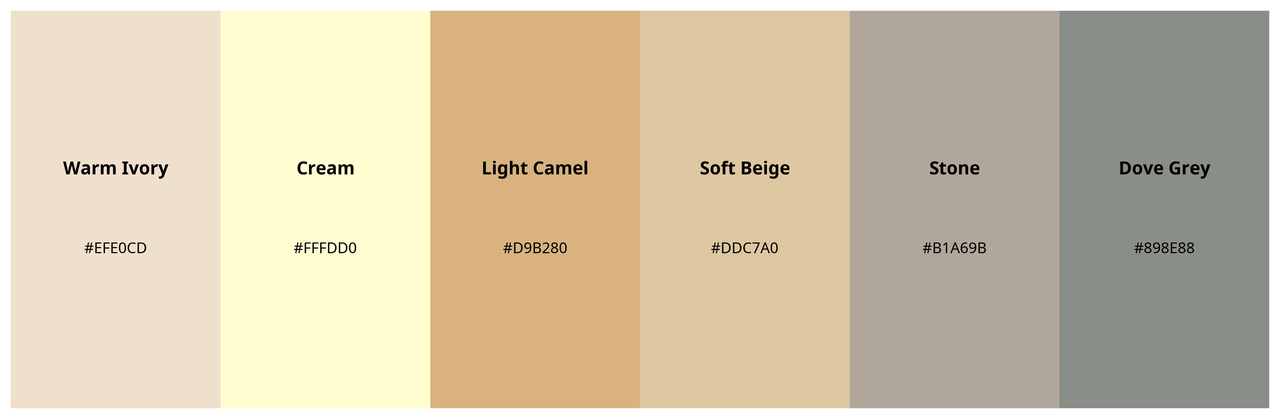
Neutrals are the backbone of your wardrobe. As a Light Spring, you should avoid the harshness of stark black and white.
- Best Neutrals: Warm Ivory, Cream, Light Camel, Soft Beige, and Stone.
- The Special Case: Dove Grey. This is your secret weapon—a warm, soft grey that provides a sophisticated alternative to cool, steel greys.
The Accents (Pop of Color)
- Reds & Pinks: Think of fresh fruits and flowers. Coral, Warm Salmon, and Peach are your staples. For a pinker tone, look for Raspberry Sherbet or Warm Baby Pink.
- Yellows & Oranges: You shine in Light Butter Yellow, Apricot, and Light Tangerine. Avoid heavy, burnt oranges that look like Autumn.
- Greens & Blues: Your greens should be fresh and yellow-based, like Mint Green or Pastel Yellow-Green. For blues, choose Aqua, Turquoise, and Periwinkle (a stunning mix of blue and violet that brightens your complexion).
Colors to Avoid (The "Danger Zone")
Knowing what not to wear is just as important as knowing your best colors.
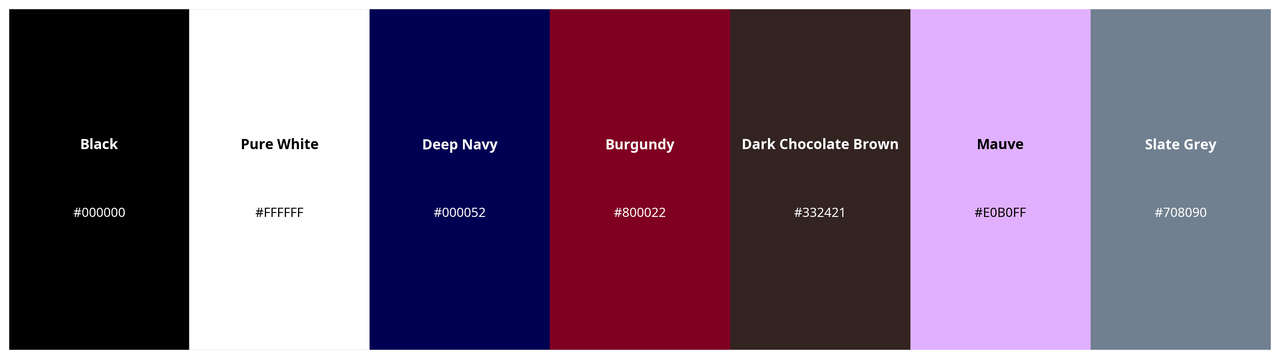
- Black & Pure White: Black is your worst enemy. It is too heavy, dark, and cold, creating a shadow over your face that highlights fine lines and makes you look tired. Pure white is also too stark; opt for Ivory instead.
- Dark & Heavy Colors: Deep Navy, Burgundy, or Dark Chocolate Brown will overwhelm your delicate coloring. You wear the clothes; don't let the clothes wear you.
- Cool & Muted Colors: Avoid dusty, greyed-out cool tones like Mauve or slate grey. These will clash with your warm skin and make you look sickly or yellowish.
Korean Color Analysis & Style Influence
The light spring color palette Korean trend, is currently dominating beauty and fashion conversations. South Korea has become a global hub for Personal Color Analysis, and its aesthetic is particularly well-suited for Light Springs.
K-beauty trends often emphasize "Fruit Juice Makeup" (fruity, nectar-like colors) and "Glass Skin"—styles that align perfectly with the Light Spring need for clarity and gloss. Korean fashion also frequently utilizes low-contrast, pastel-heavy combinations (like cream paired with soft mint), which serve as excellent inspiration for this season. If you are struggling to find outfits, searching for "Korean pastel fashion" can yield better results than standard Western keywords.
Light Spring vs. Other Seasons (Clearing Confusion)
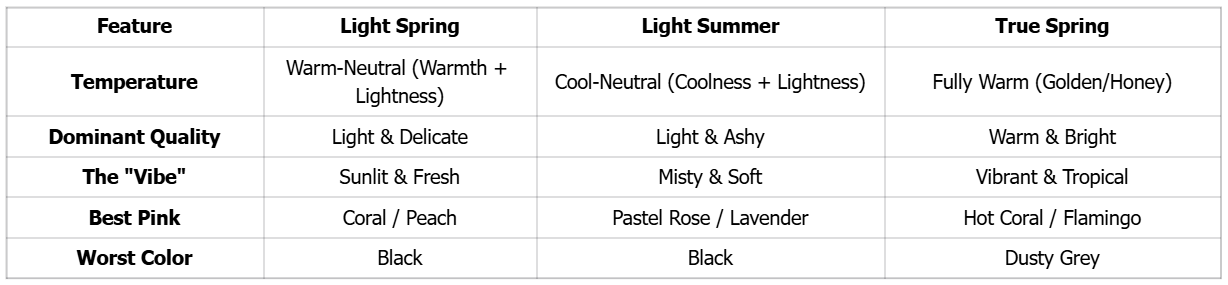
It is very common to feel stuck between two seasons. The most frequent confusion occurs between Light Spring and its neighbor, Light Summer, or its "big sister," True Spring.
Here is a quick comparison to help you spot the difference:
Light Spring vs. Light Summer
The battle of light spring vs. light summer is the hardest to judge because both seasons share the primary characteristic of "Light."
- The "Butter vs. Milk" Test: Think of the base of your skin. Light Spring skin looks like it has a drop of warm butter or honey in it. Light Summer skin looks like it has a drop of cool milk or pink dye in it.
- The Color Test: Try comparing a warm Coral against a cool Lavender or Powdery Pink. If the Coral makes you look healthy and the Lavender makes you look grey, you are a Light Spring. If the Lavender makes you look fresh and elegant, you are likely a Light Summer.
Light Spring vs. True Spring
While both are warm, the true spring color palette is much more saturated and intense.
- Saturation: Light Spring colors are diluted with white (pastel). True Spring colors are pure and vivid.
- The Intensity Check: A True Spring can handle bright splashy orange and grass green. These colors will overwhelm a Light Spring, who needs softer, creamier versions like apricot and mint.
How to Style Light Spring (Outfits & Inspiration)
Now that you know your colors, how do you wear them? The goal for styling a Light Spring is to maintain that sense of "gentle brightness" without letting heavy fabrics or dark makeup drag you down.
Makeup Guide: The Glowy Look
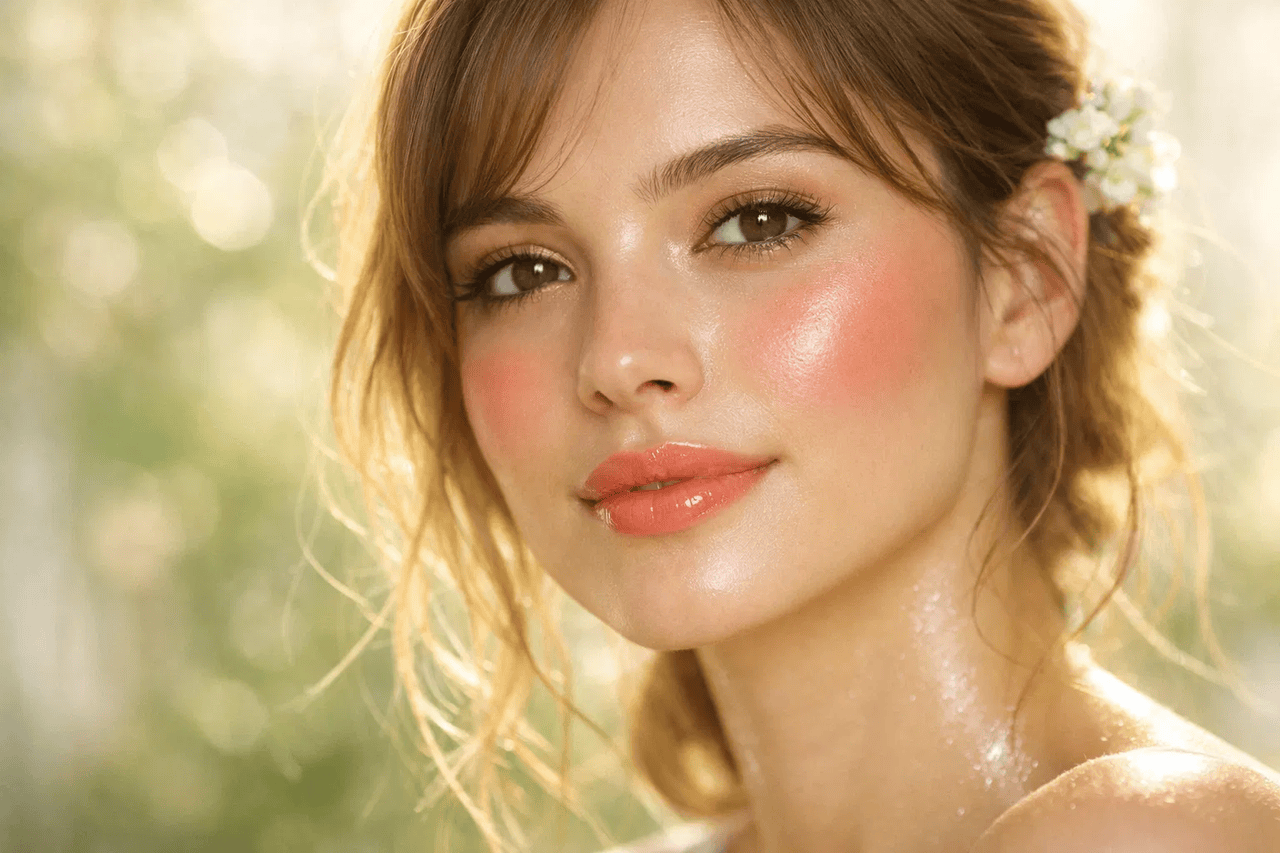
Your makeup should replicate the fresh, dewy look of a spring morning.
- The Golden Rule for Mascara: If you change only one thing, let it be this—ditch the black mascara. Black is too harsh for your delicate features. Switch to brown or dark brown mascara and eyeliner. This simple swap will instantly make your eyes pop rather than looking heavy.
- Lips & Cheeks: Avoid matte finishes. Go for Glowy and Dewy textures.
- Blush: Choose Soft Peach or Warm Pink.
- Lips: Creamy Corals and sheer lip glosses are your best friends.
Everyday Light Spring Color Palette Outfits
When building your daily look, aim for Tonal Dressing. Since you have low contrast, wearing an outfit composed entirely of similar shades (like beige, cream, and peach) looks incredibly sophisticated and high-end on you.
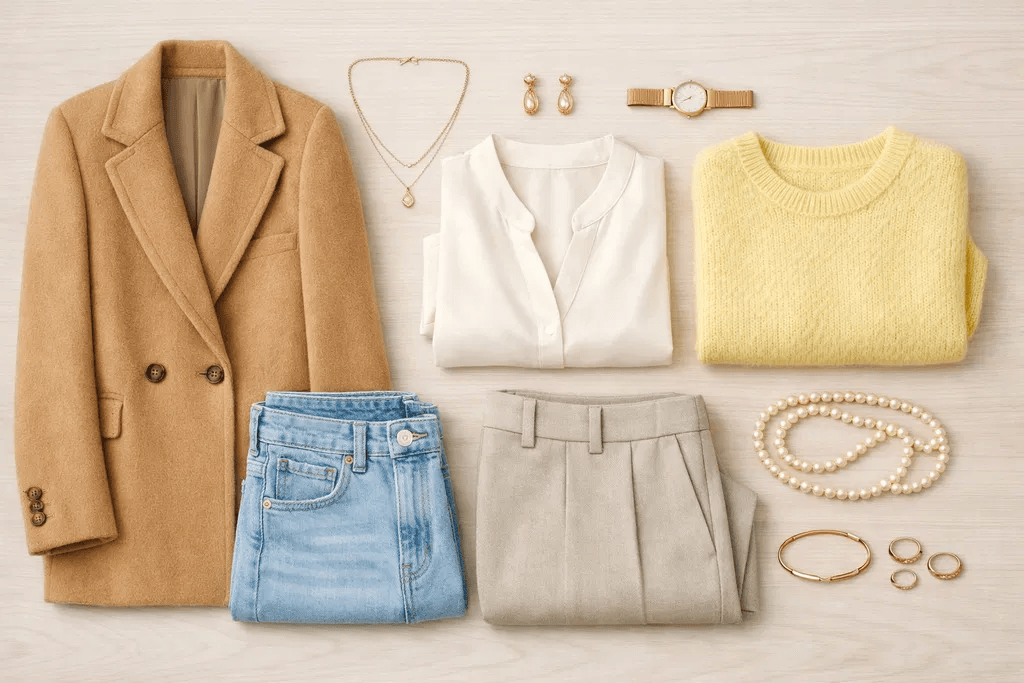
A Simple Light Spring Capsule Wardrobe:
- Outerwear: A classic Camel Coat (instead of black).
- Top: An Ivory Silk Blouse or a Butter Yellow sweater.
- Bottoms: Light Denim jeans or Stone-colored trousers.
- Jewelry: Rose Gold is your absolute best metal. It harmonizes perfectly with your skin's warm undertones. Light Gold and Cream Pearls are also stunning choices.
How to Wear Light Spring in Fall & Winter
The biggest challenge for this season is shopping during the colder months. Most stores stock dark burgundy and black, which leaves many asking: How do I adapt the light spring color palette for fall?
The secret is to swap "Dark" for "Neutral."
- Don't try to wear the deep, earthy tones of Autumn (like rust or olive), as they will make you look muddy.
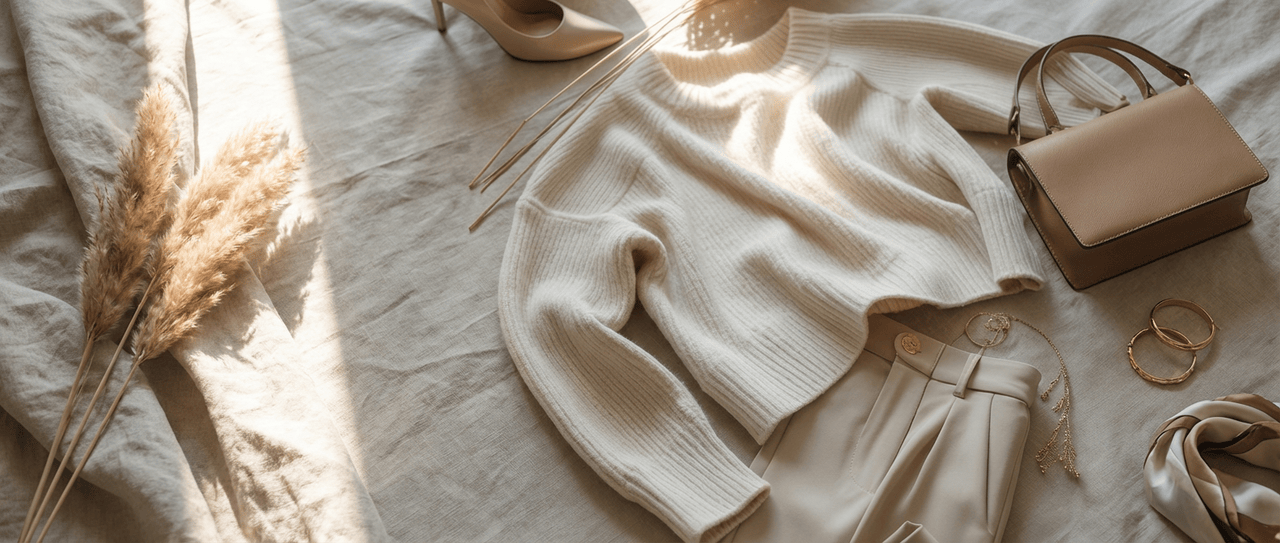
- Build your winter wardrobe around Warm Beige, Camel, and Cream. You can create a "Winter White" look that feels cozy but stays true to your palette.
- Add Warmth: If you must wear darker colors, keep them away from your face. Wear a charcoal grey coat, but pair it with a bright Peach scarf to reflect the right light onto your skin.
Frequently Asked Questions
Q: Can a Light Spring have brown hair?
A: Yes. As we explored in the Characteristics section, you don't need to be a natural blonde. You can absolutely be a Light Spring with light golden brown or soft brunette hair, provided your overall contrast is low. If your brown hair glows with warm, golden tones in the sunlight rather than cool ash, you fit the season.
Q: Can Light Springs wear black?
A: It is not recommended. Because Light Spring is defined by "gentle brightness," black is too heavy and harsh. It creates a high contrast that can make you look tired. Instead, opt for the alternatives mentioned in our Neutrals section, like Warm Charcoal, Dove Grey, or Chocolate Brown, which frame your face much better.
Q: Am I Light Spring or Light Summer?
A: The easiest way to tell is the "Temperature Test." Remember our comparison: Light Spring is like adding butter (warm), while Light Summer is like adding milk (cool). If you look radiant in Coral and Peach (warm pinks), you are a Light Spring. If you look better in Lavender or cool Baby Pink, you are likely a Light Summer.
Q: Can Light Spring wear silver jewelry?
A: You can wear silver if it is bright and shiny, but it is not your best choice. Because your skin has a warm-neutral undertone, Rose Gold and Light Gold (as recommended in our Styling guide) will harmonize much more beautifully with your skin than cool metals.
Conclusion: Embrace Your Inner Radiance
Discovering that you are a Light Spring is like unlocking a secret filter for your life. By aligning your wardrobe with the Light Spring color palette, you replace the harshness of black with the elegance of warm ivory, camel, and fresh coral. Whether you are experimenting with Korean beauty trends or perfecting your everyday outfits, the goal is always to keep it light, warm, and clear.
Trust your mirror and don't be afraid to let go of dark, heavy tones. If a color makes your eyes sparkle and your skin look creamy and rested, you have found your match. Step out of the shadows and let your natural warmth shine through!